Tap the beads, boost your brain!
The fun way for kids to learn the abacus and master mental maths
Play games, learn magic maths tricks, earn stars and badges, and become a number superhero, 10 minutes a day.
▶ Watch BeadBop in 48 seconds
🎂 How old are you?
Tap your age and jump straight in.
🌈 Pick a world
Every world has lessons, practice, a quiz and games. Grown-ups: see the full curriculum.
🎮 30 games to play
Every right answer earns stars ⭐ and XP.
Collect stars, badges and streaks!
Play a little every day to grow your 🔥 streak, fill your level ring and unlock shiny badges. Today’s adventure is waiting.
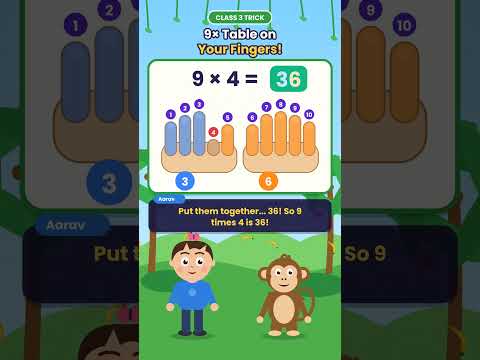
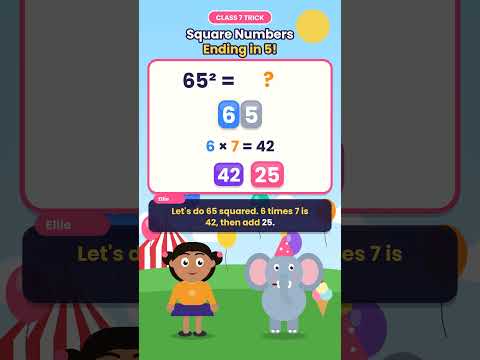
⭐ Start my adventure✨ Maths tricks in 60 seconds
New animated tricks every week on Instagram, YouTube and Facebook.



👨👩👧 For grown-ups
103 lessons, 213 tricks, 30 games
BeadBop teaches the Japanese soroban one bead at a time, plus Vedic and mental-maths tricks, school maths for Classes 1–7, Olympiad practice and board-syllabus maths up to Class 12.
How BeadBop works
A proven abacus method, made playful.
📘 Learn with the beads
Short guided lessons show exactly which beads to move. Hints, highlights and instant cheers keep kids moving forward.
✏️ Practise at the right level
Read, build, add, subtract, multiply and divide — Practice Studio adapts to four difficulty levels.
🧠 Go mental
Flash Anzan and mental lessons hide the beads so children learn to picture the abacus — the real secret of abacus math.
A complete abacus curriculum
From the first bead to grandmaster mental math — 20 levels, every bead formula covered. See the full curriculum →
8 lessons · Hello, Soroban!, Story of the Abacus…
2 lessons · Direct Addition, Direct Subtraction…
2 lessons · Small Friends: Adding, Small Friends: Subtracting…
3 lessons · Big Friends: Adding, Big Friends: Subtracting…
3 lessons · Two-Digit Sums, Multiplication…
3 lessons · Three-Digit Adding, Three-Digit Subtracting…
4 lessons · Tables of 2, 5 & 10, Tables of 3, 4 & 6…
3 lessons · Sharing Equally, Division Facts…
Why the abacus works
Read more in our guide to abacus benefits.
🔢 Real number sense
Children see place value and the 5- and 10-pairs behind every sum, instead of memorising rules.
🎯 Focus & memory
Holding a picture of the beads in mind trains concentration and working memory in short, fun bursts.
⚡ Speed & confidence
With practice, kids add long chains of numbers in their heads — and start to love maths.
Questions parents ask
What age is BeadBop for?
BeadBop is designed for children aged 5 to 12. Five- and six-year-olds start with counting on the abacus; older children move quickly to the friend formulas, multiplication, division and mental math.
Does my child need a physical abacus?
No. BeadBop includes an on-screen soroban that works with a mouse or a finger on a tablet or phone. A physical abacus is a nice extra but not required.
What is the difference between an abacus and a soroban?
A soroban is the Japanese abacus, with one bead above the beam (worth 5) and four below (worth 1 each). It is the abacus used in most modern mental-math programmes, and it is the one BeadBop teaches.
How long should my child practise each day?
Ten to fifteen minutes a day works best. Short, regular sessions build the visual memory that mental abacus calculation depends on.
Is BeadBop free?
Yes — you can start free with Google sign-in, including the first levels, the free abacus and the daily challenge. Premium plans unlock the full curriculum. See the pricing page for prices in your currency.
Is my child's data safe?
We only store your Google name, email and photo plus learning progress. There are no ads and we never sell data. Read our privacy policy for details.
Ready to tap, count and grow?
Start with free lessons today — sign in with Google in one tap.
Start learning free Try the abacus first